What Greets the Eye in Chiang Mai
There is no telling what will catch your eye in a new place. Walking about in Chiang Mai, it is hard not to notice a variety of figures outside of businesses: kitschy greeting statues (Tuataeng Sawasdee) to tempt tourists;
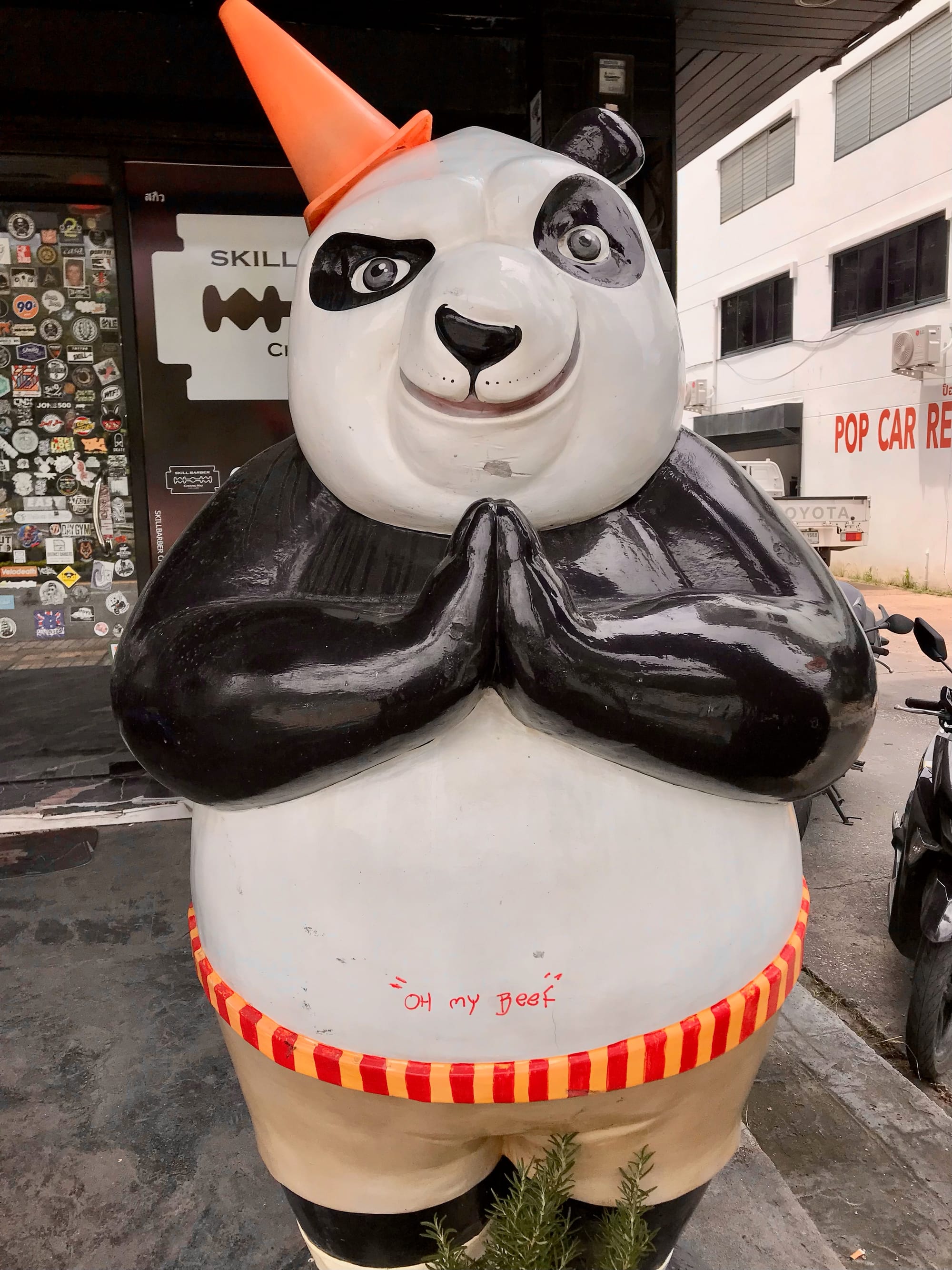
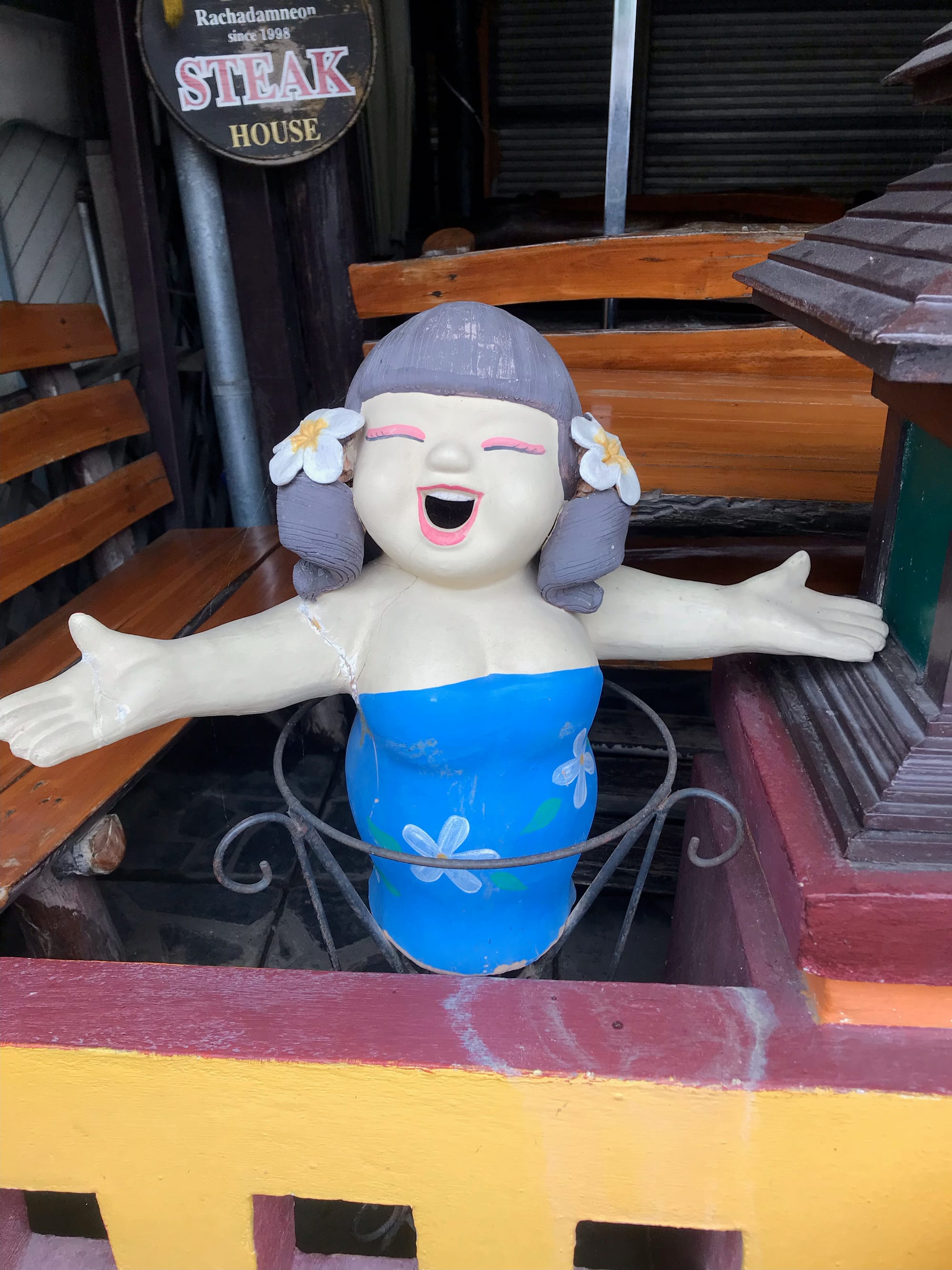
©F.L. Blumberg 2026
recycled metal sculpture and quirky props to draw you closer;
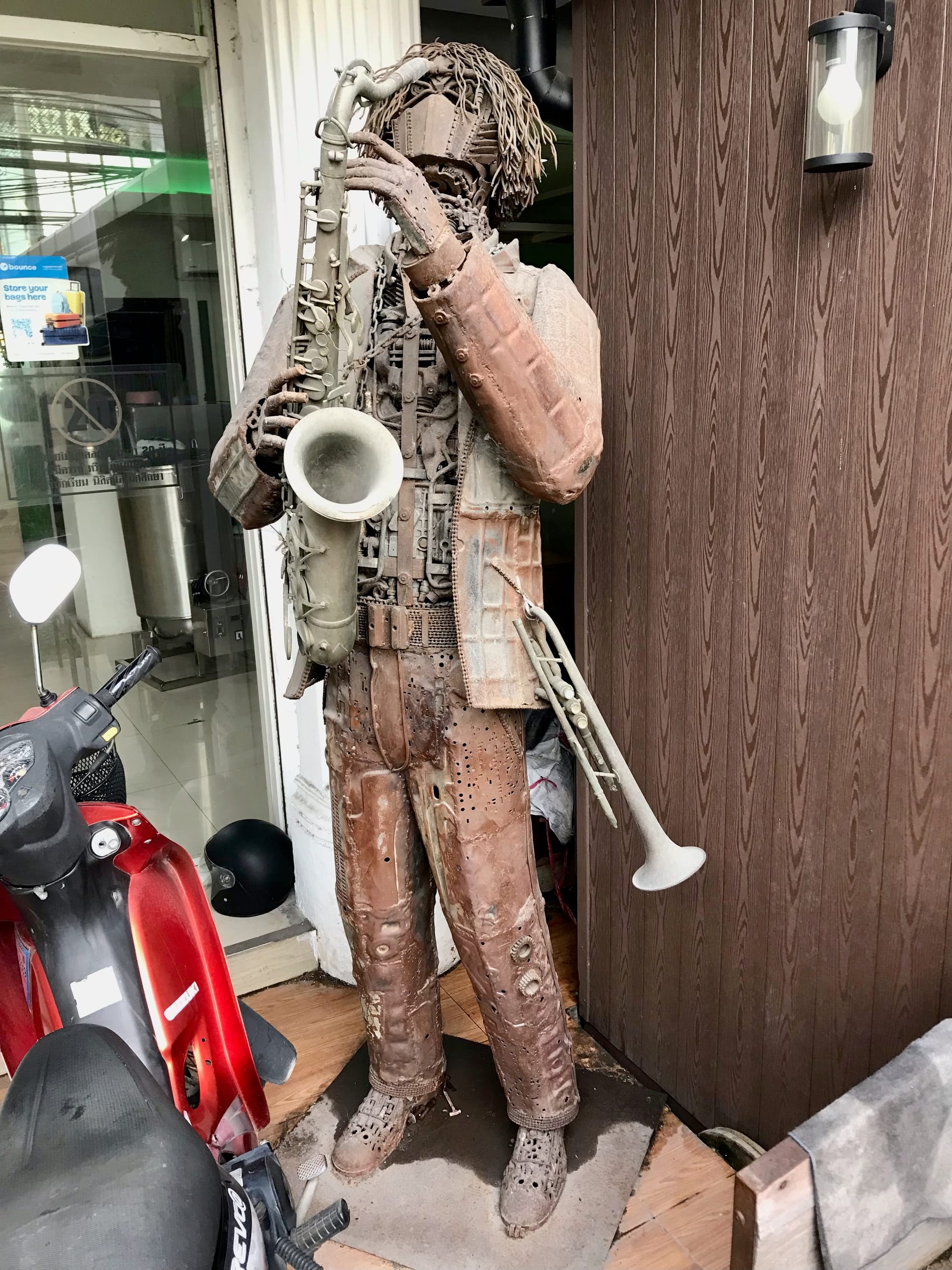
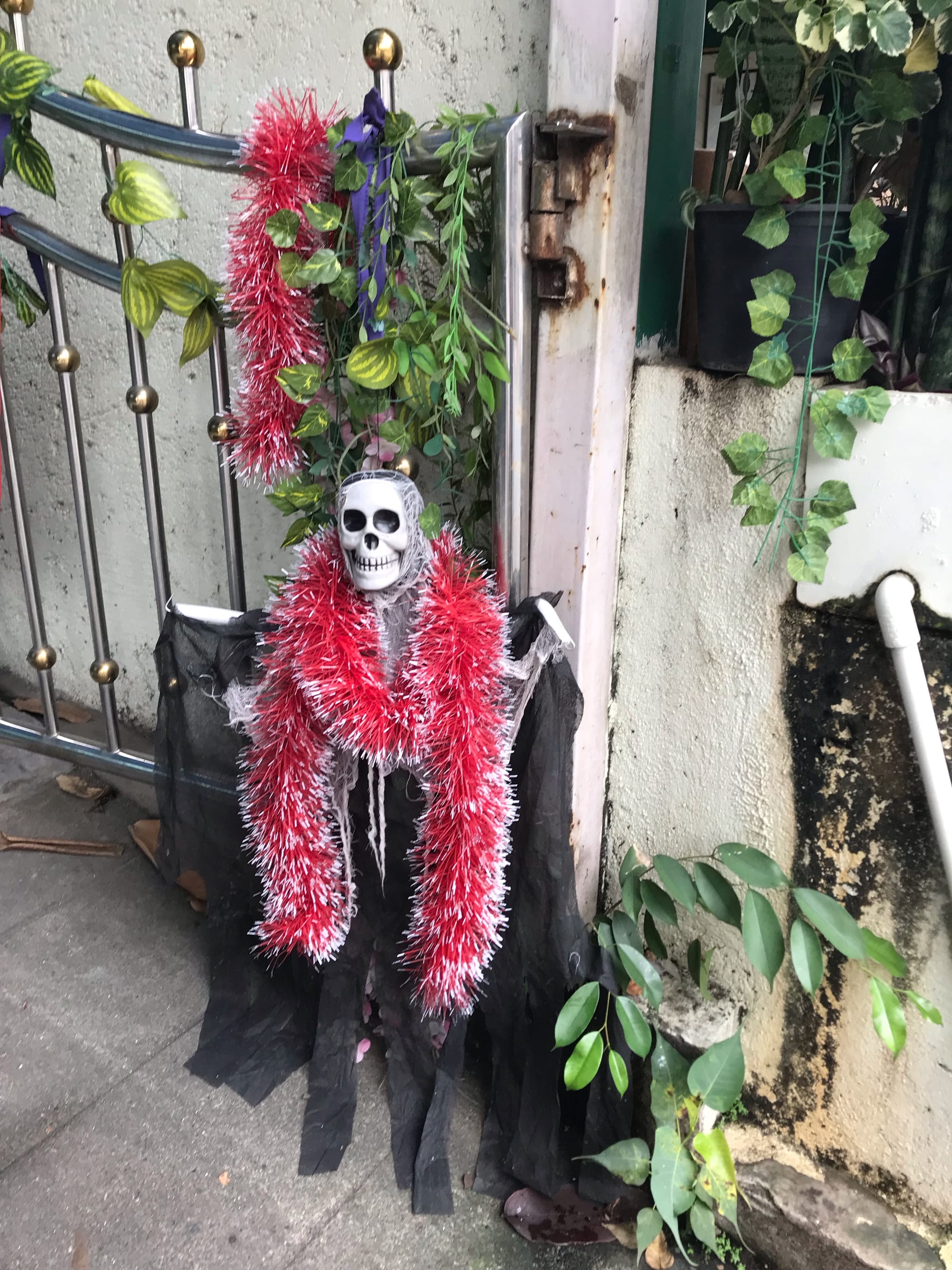
©F.L. Blumberg 2026
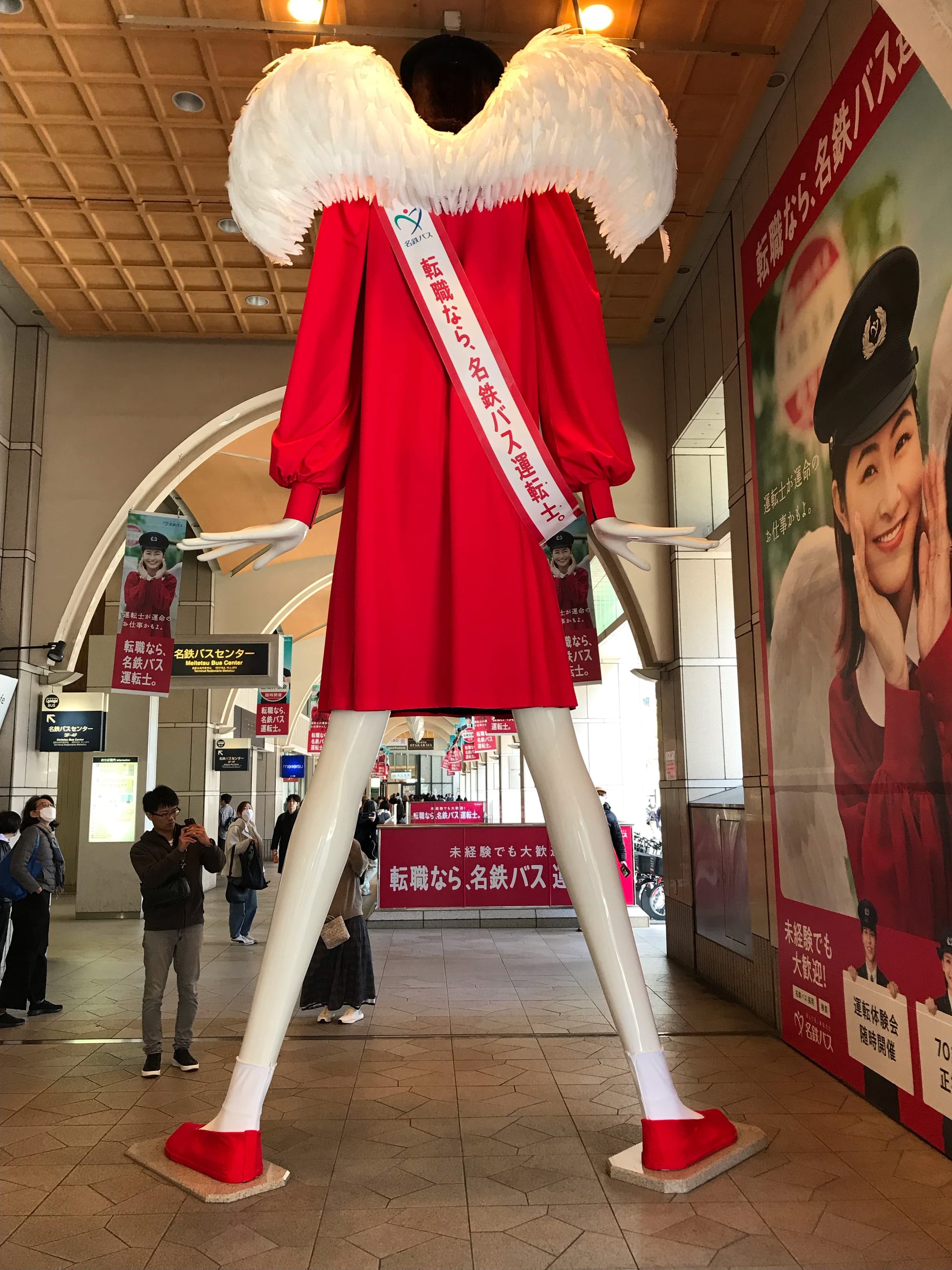
outsized fiberglass mascots designed to warm us to their brand. A large bank advertises with a chibified version of the beckoning lady (Nang Kwak), the Thai folk deity of commerce and prosperity. A beverage mogul turns himself into a pop-culture icon, posed on the pavement awaiting selfies.
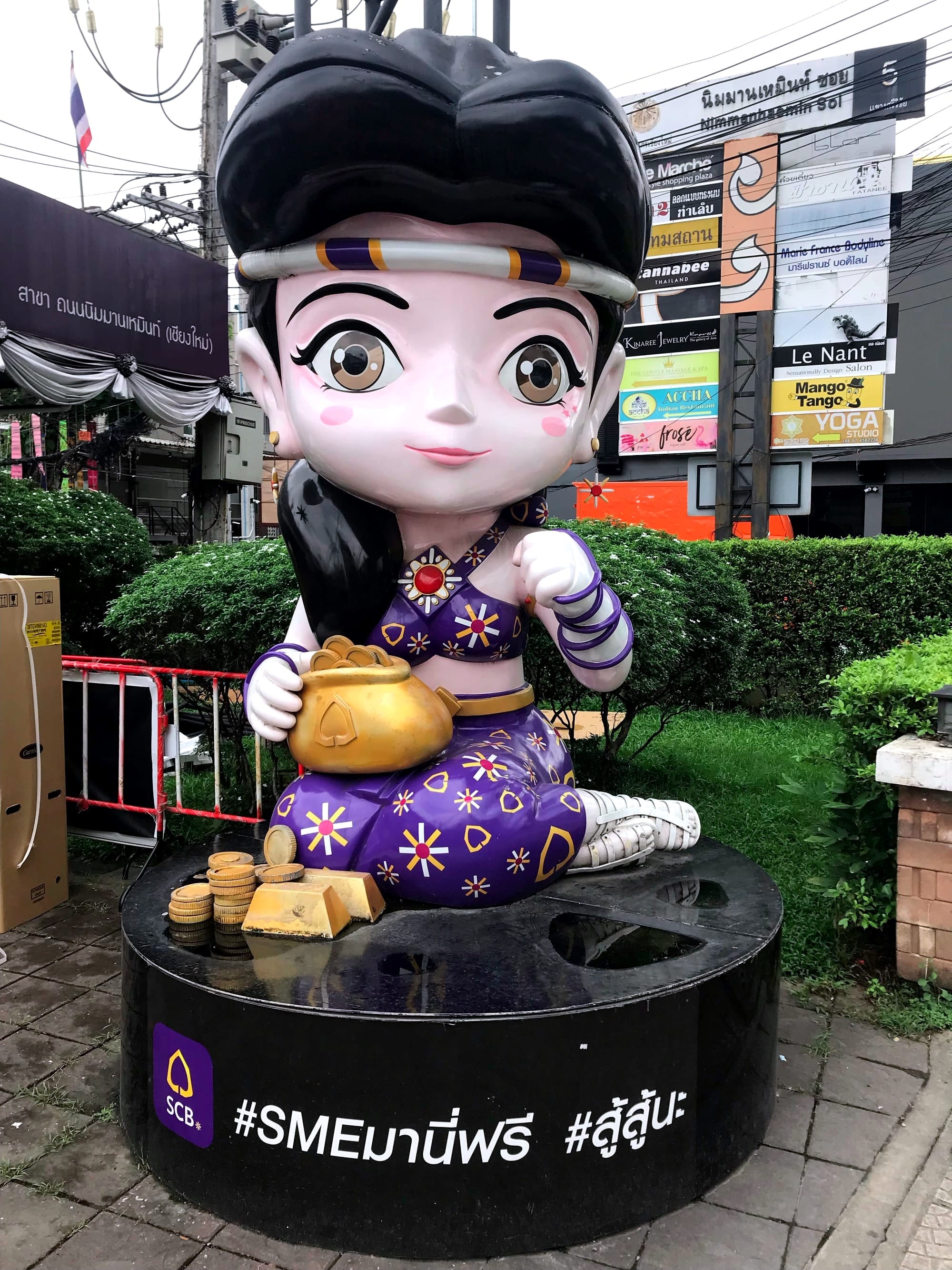
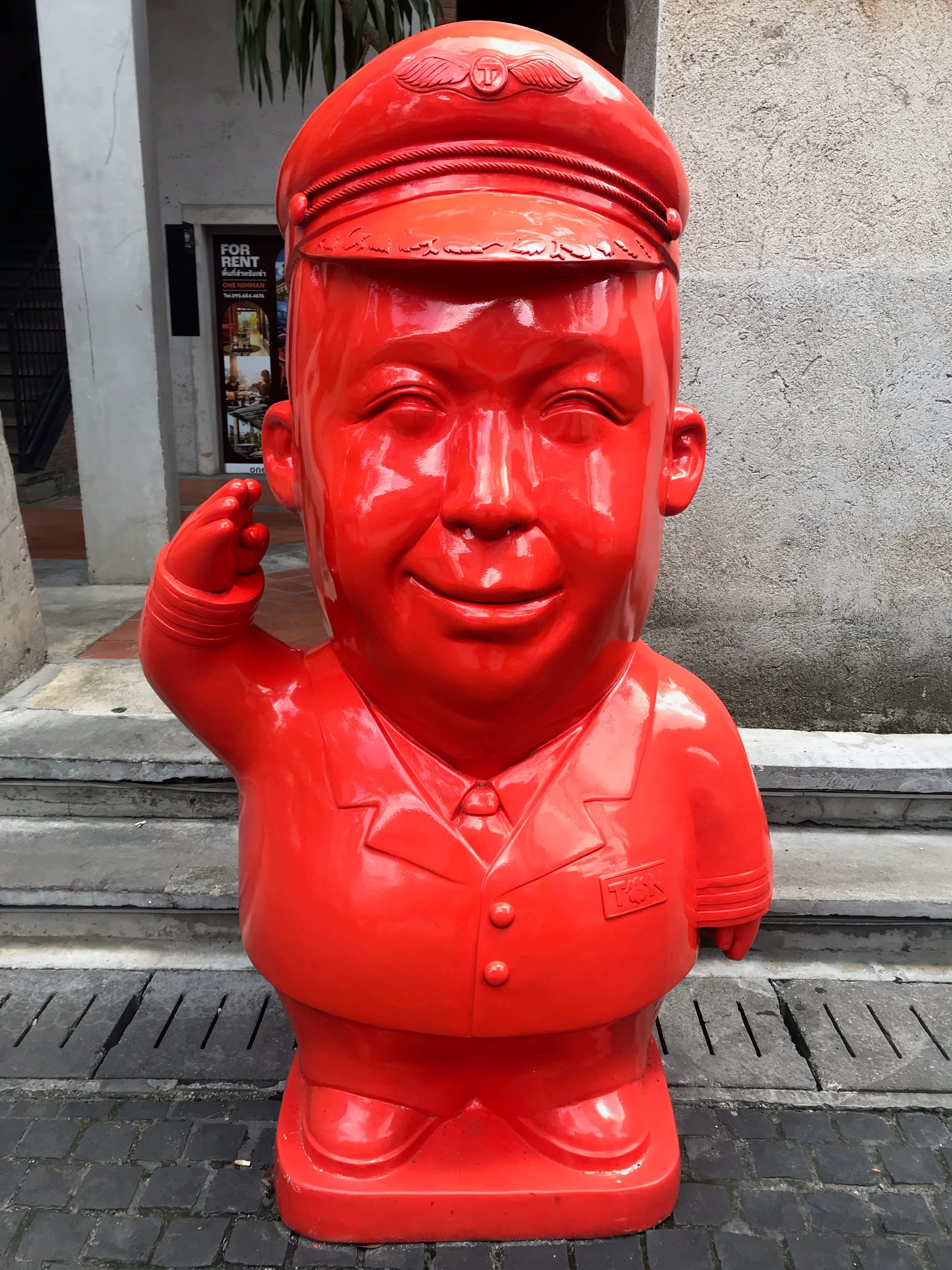
©F.L. Blumberg 2026
Even the pharmacist will have his effigy.

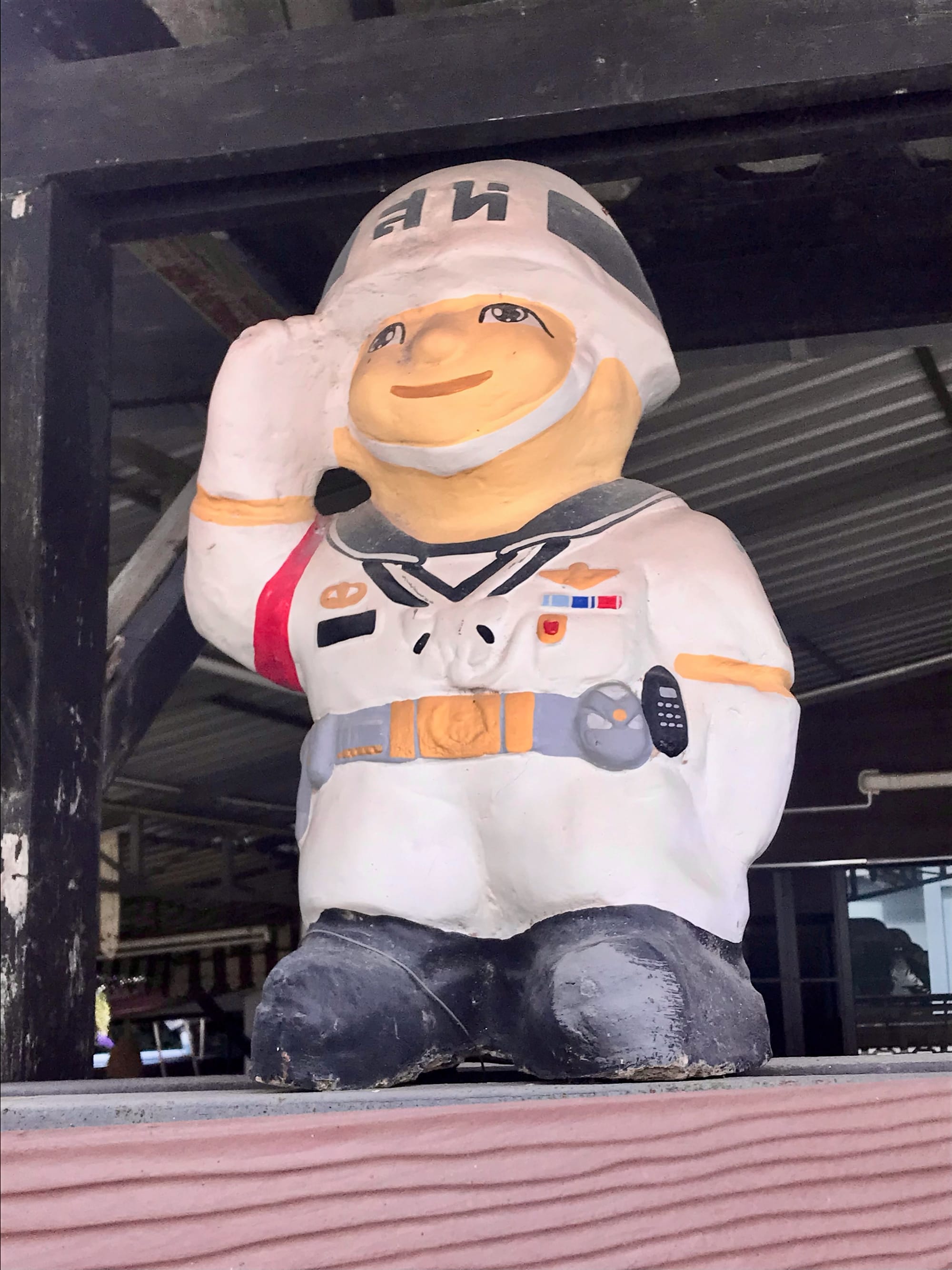
Sometimes statues are present around private residences. Sergeant Still (Ja Choei)—here atop a gate—is deployed not to bring you in, but to keep you away, gently warning drivers not to block the driveway.
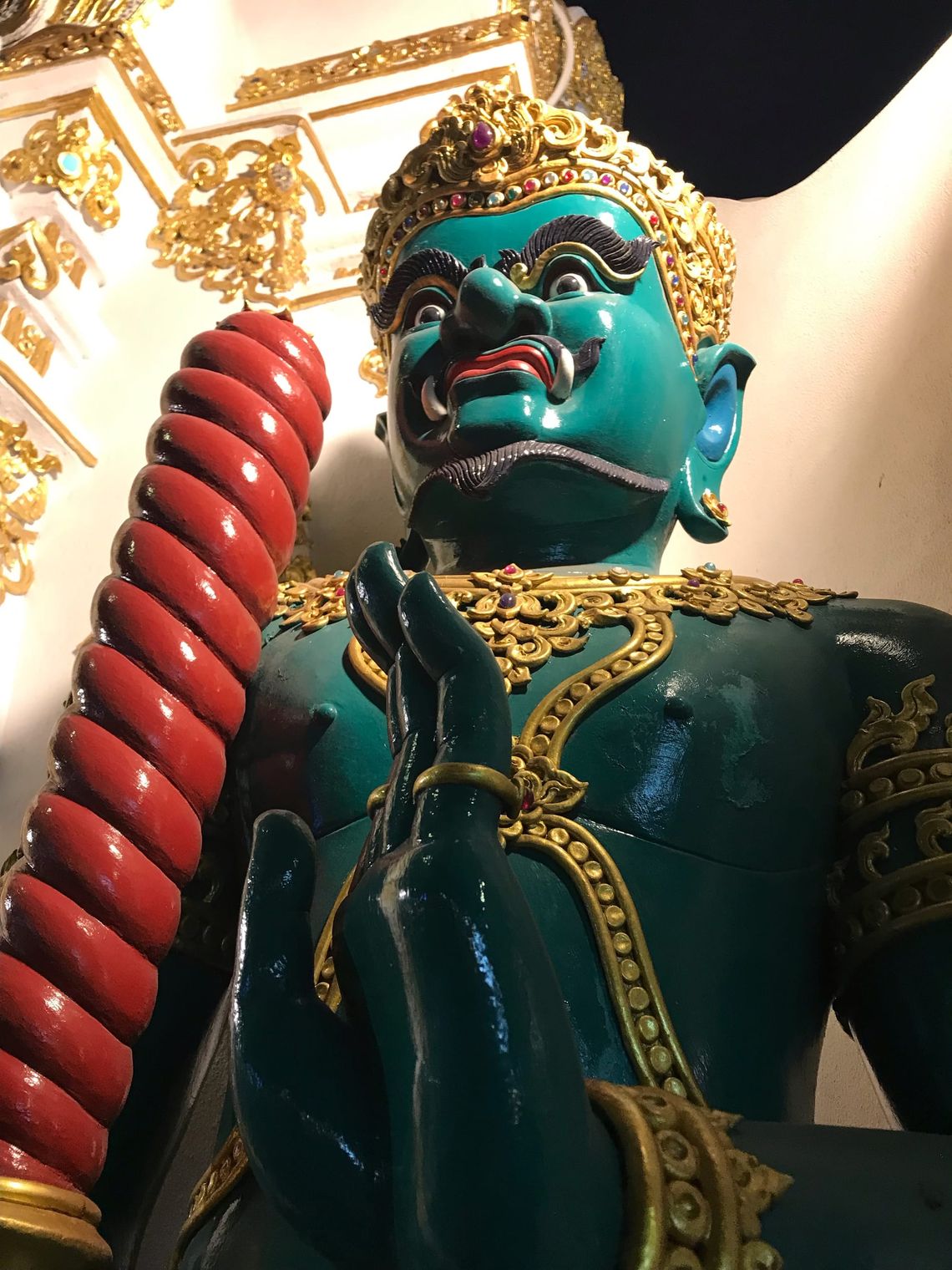
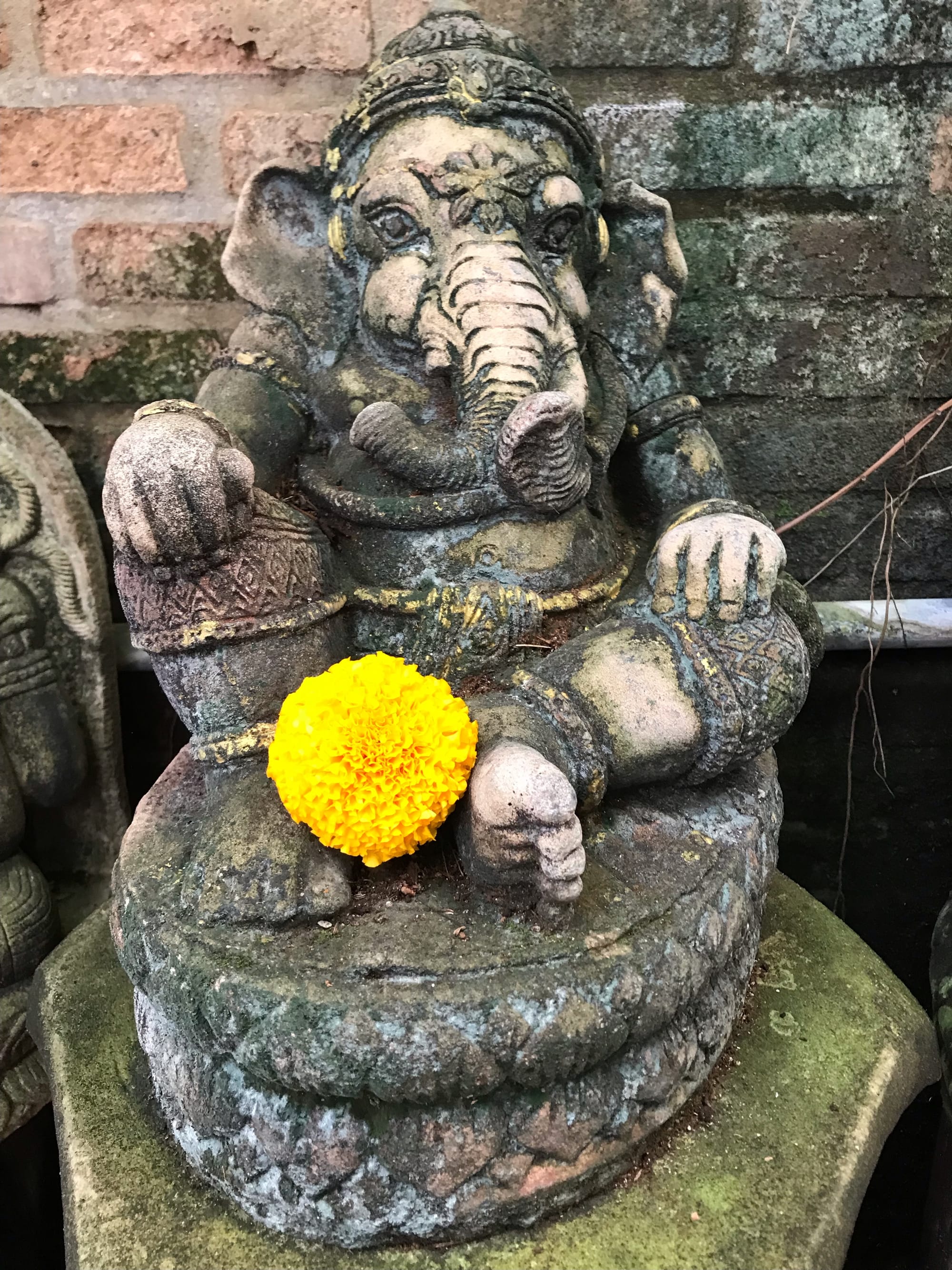
Then you might discover the deities: sacred beasts, like Phra Phikanet, a.k.a. Lord Ganesha, there to make sure the hotel operates smoothly;
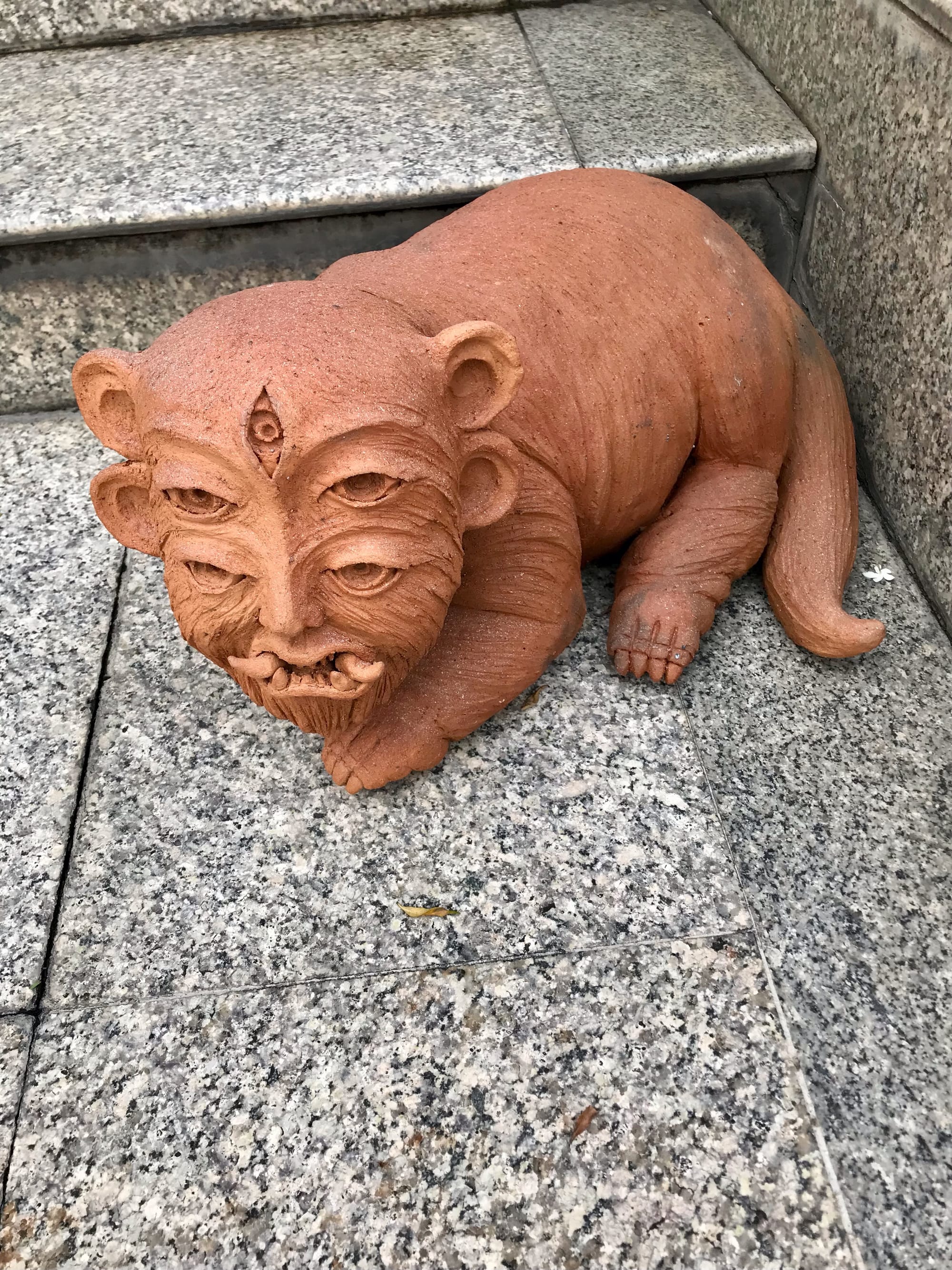
Si Hu Ha Ta ('four ears, five eyes'), a mythical creature from a Northern Thai Buddhist tale, placed outside a company's office to attract wealth;
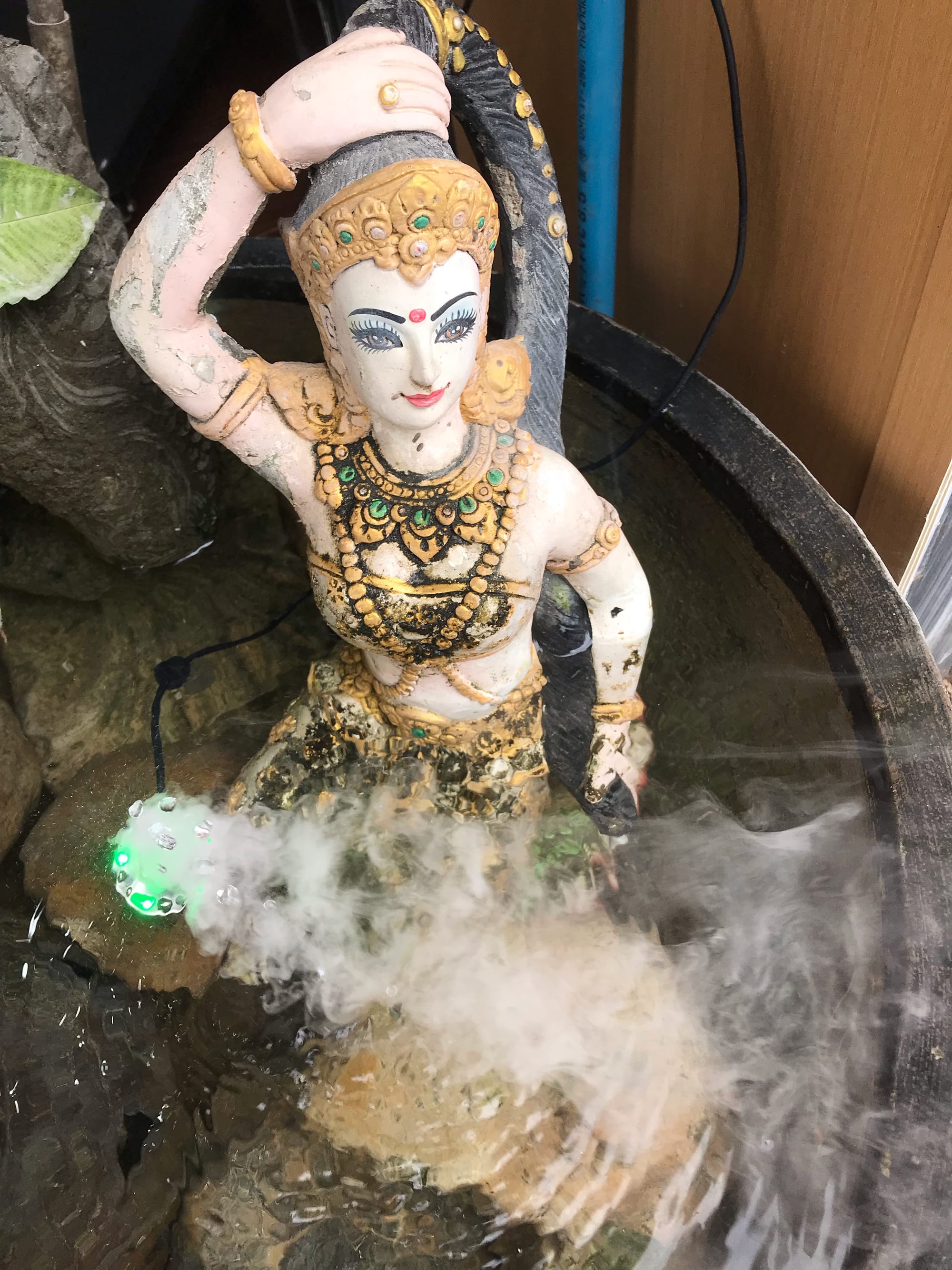
or the earth goddess Phra Mae Thorani, positioned at the entrance of a spa to wash away negativity.
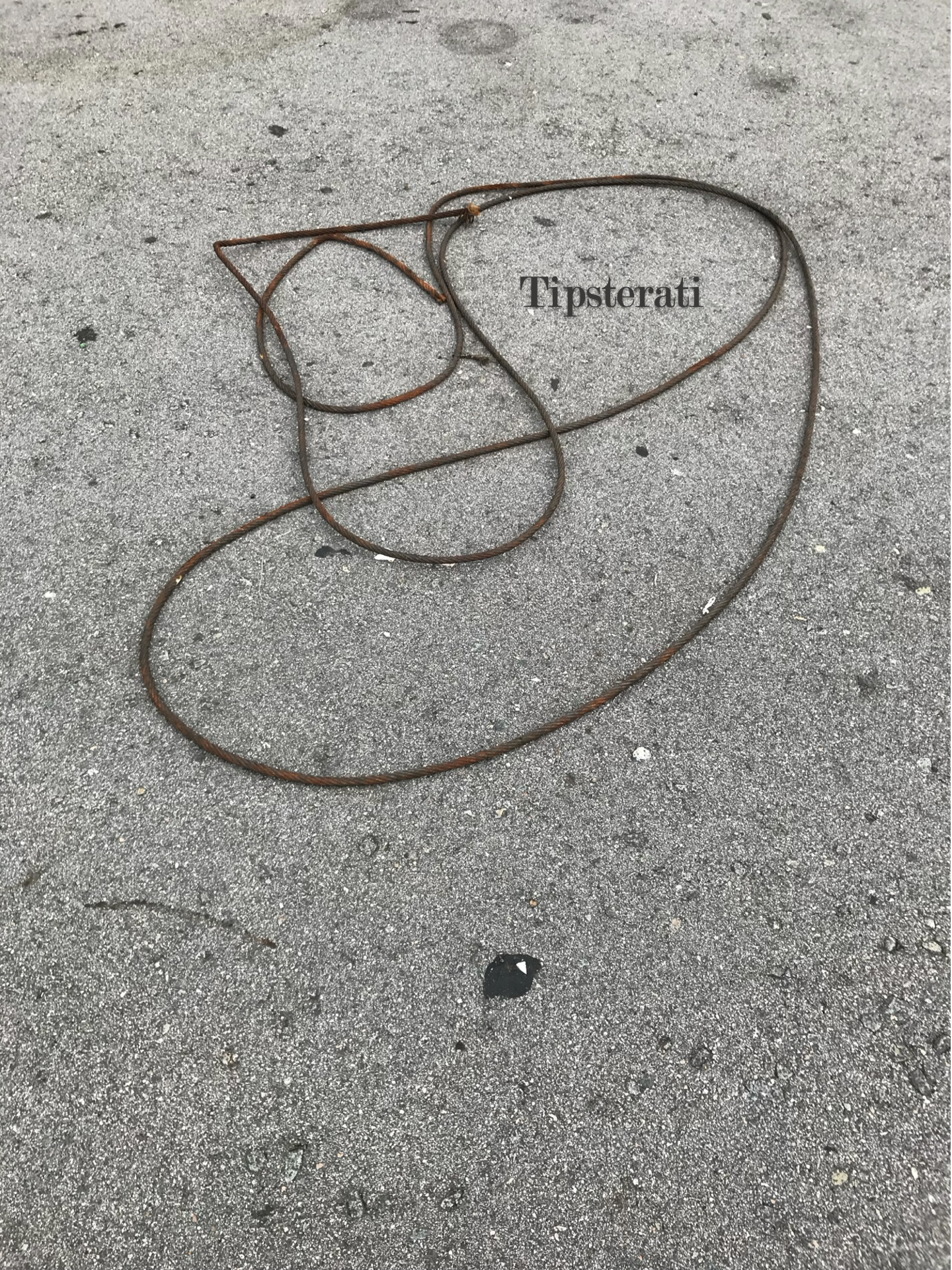
Once outside the Old City, black wires come into view more often than expected.
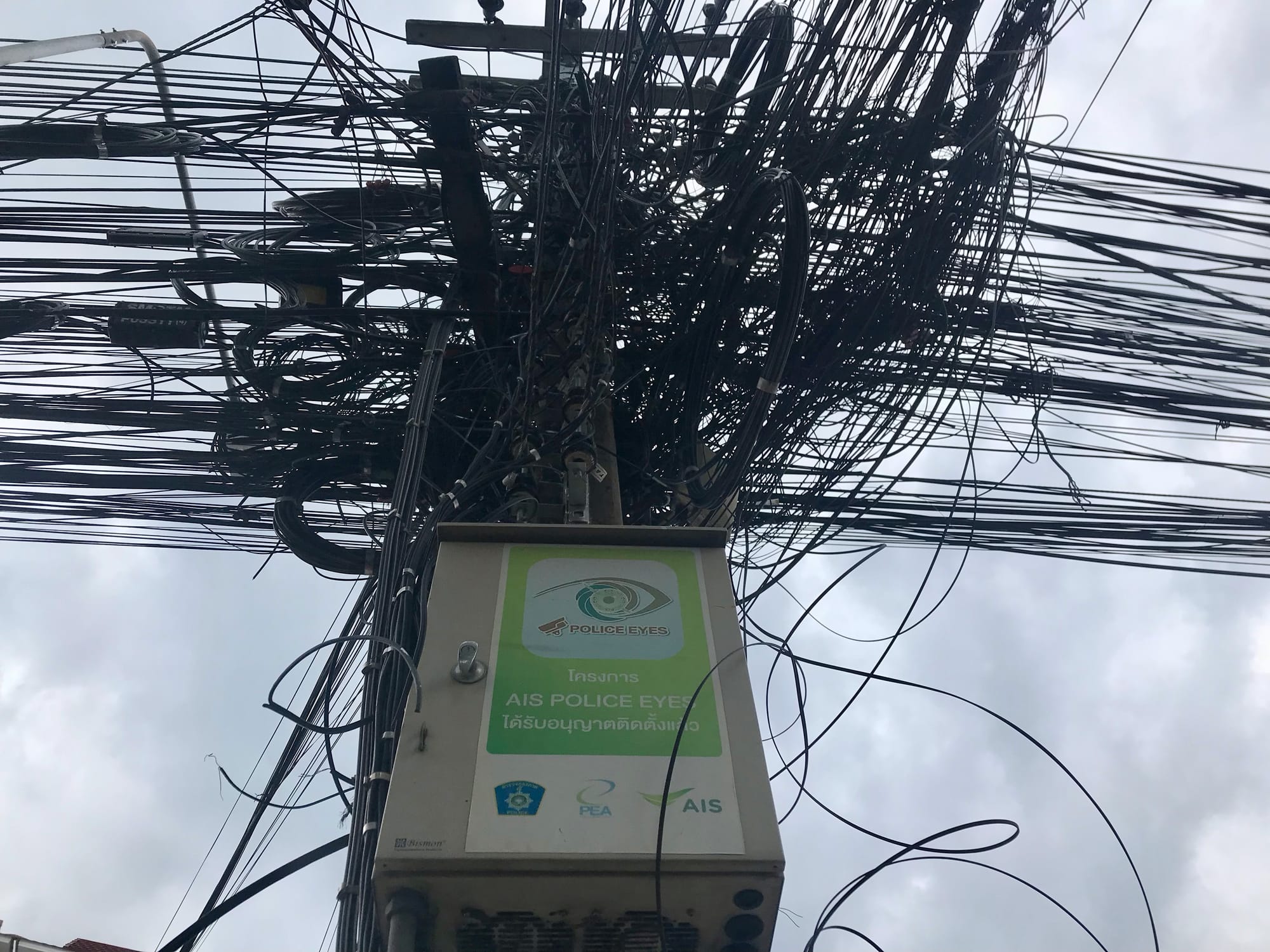
You may wonder why they are there,
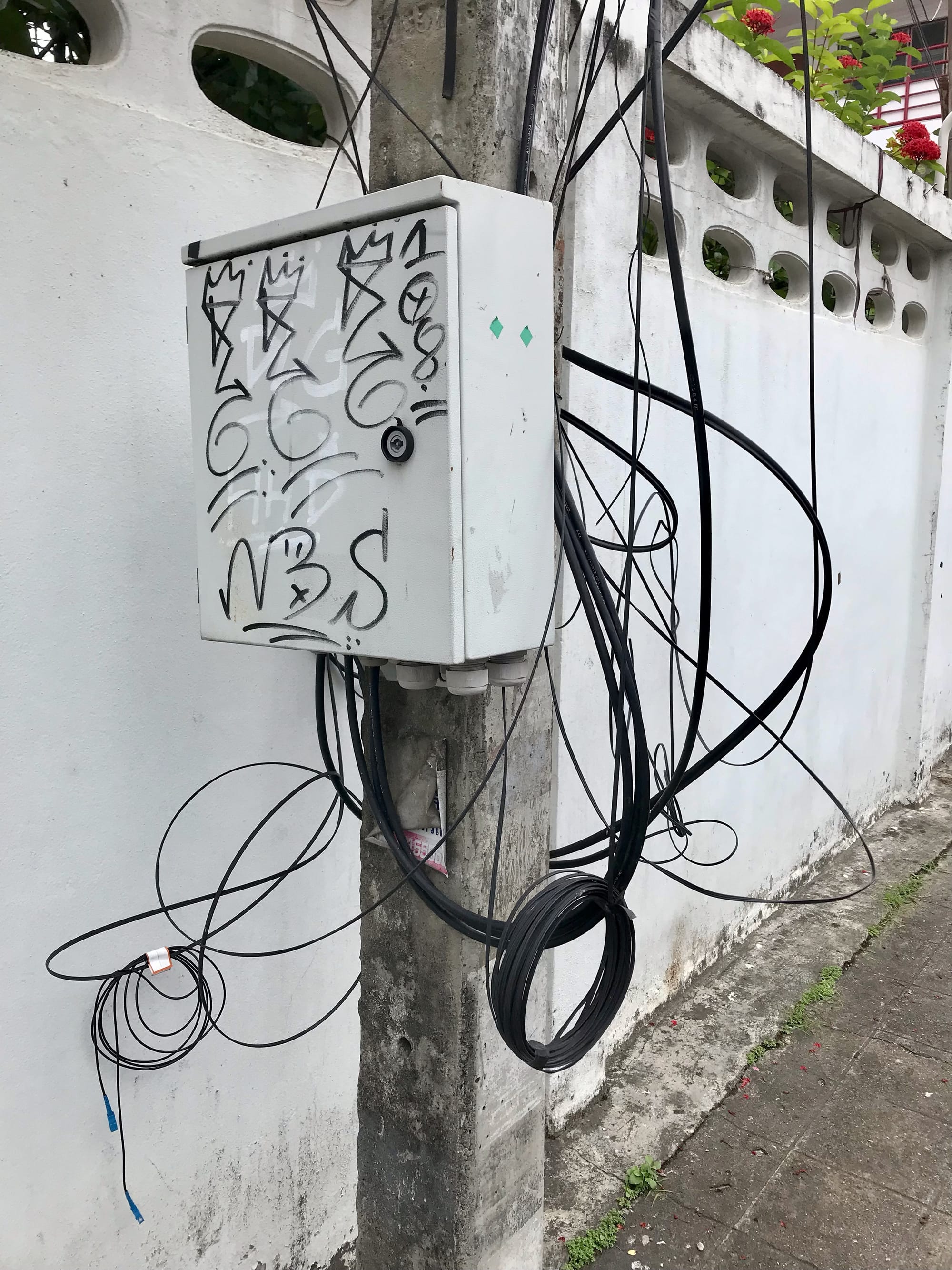
and there—
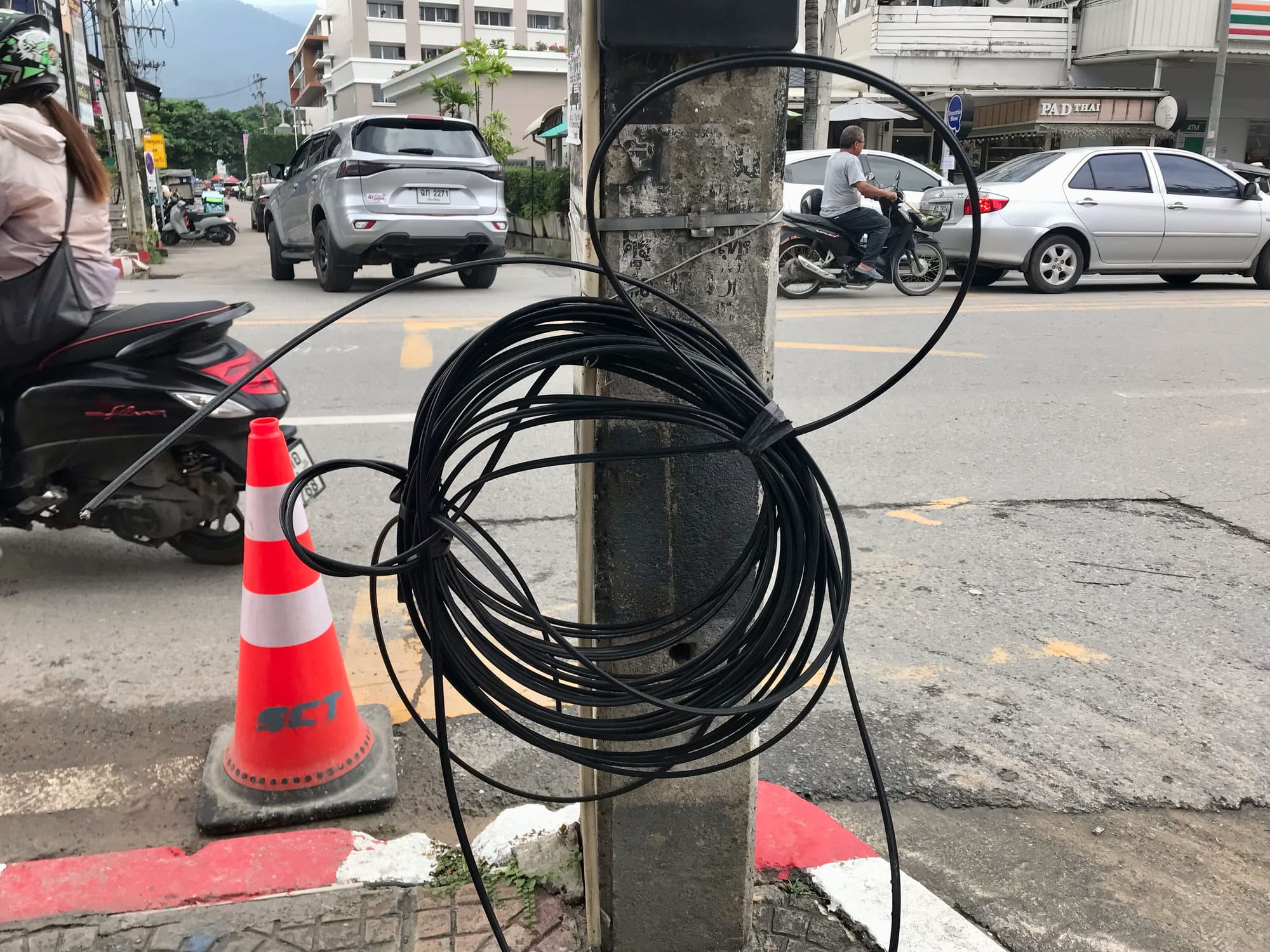
oh—and there too—along your path as well as above it.
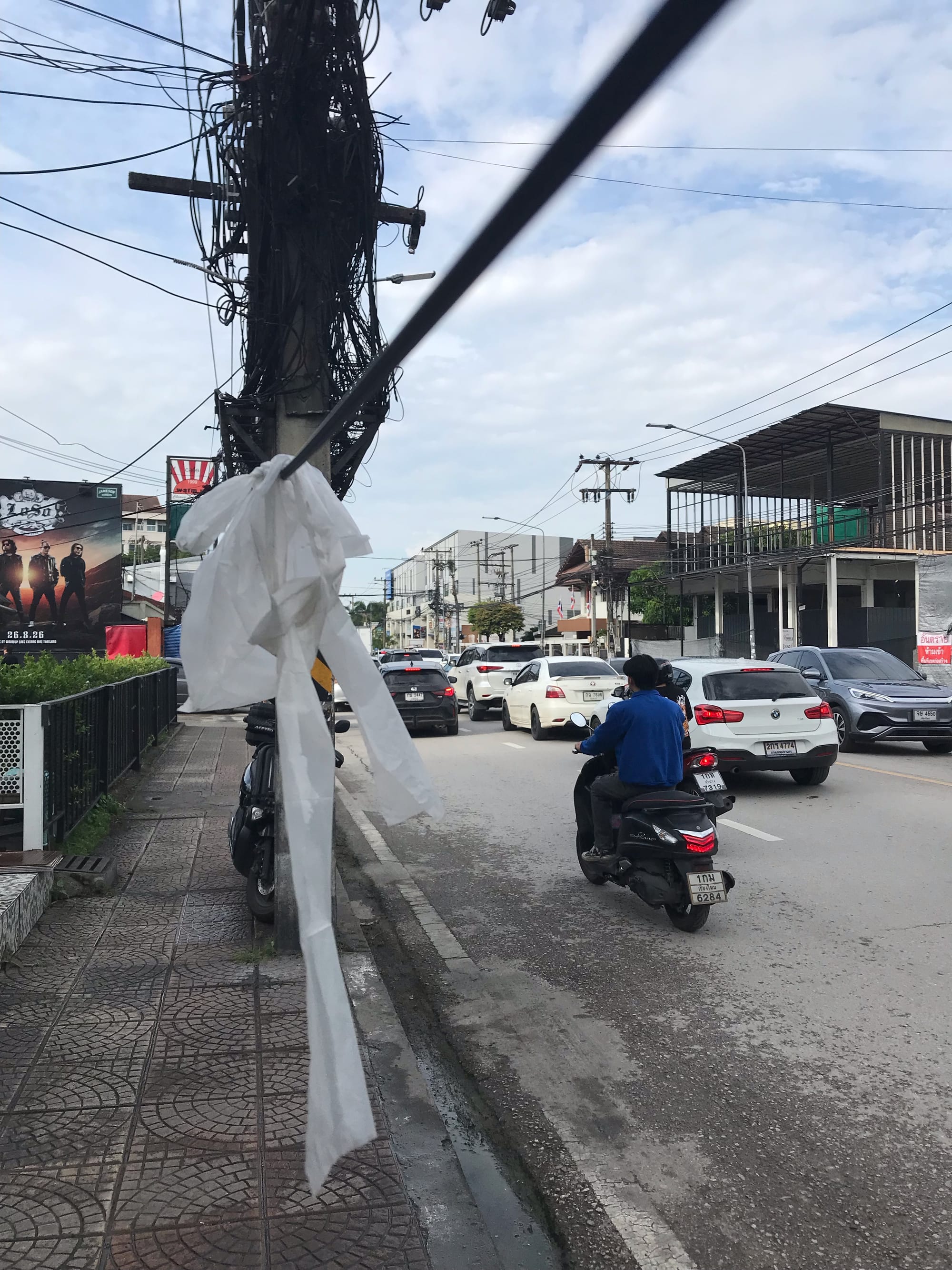
Take it as a reminder not to get frustrated when untangling headphone cables or knotted shoelaces. It could be worse; you could have to sort out the loops and webs and drapes of telecommunications lines—live and dead—in Chiang Mai.
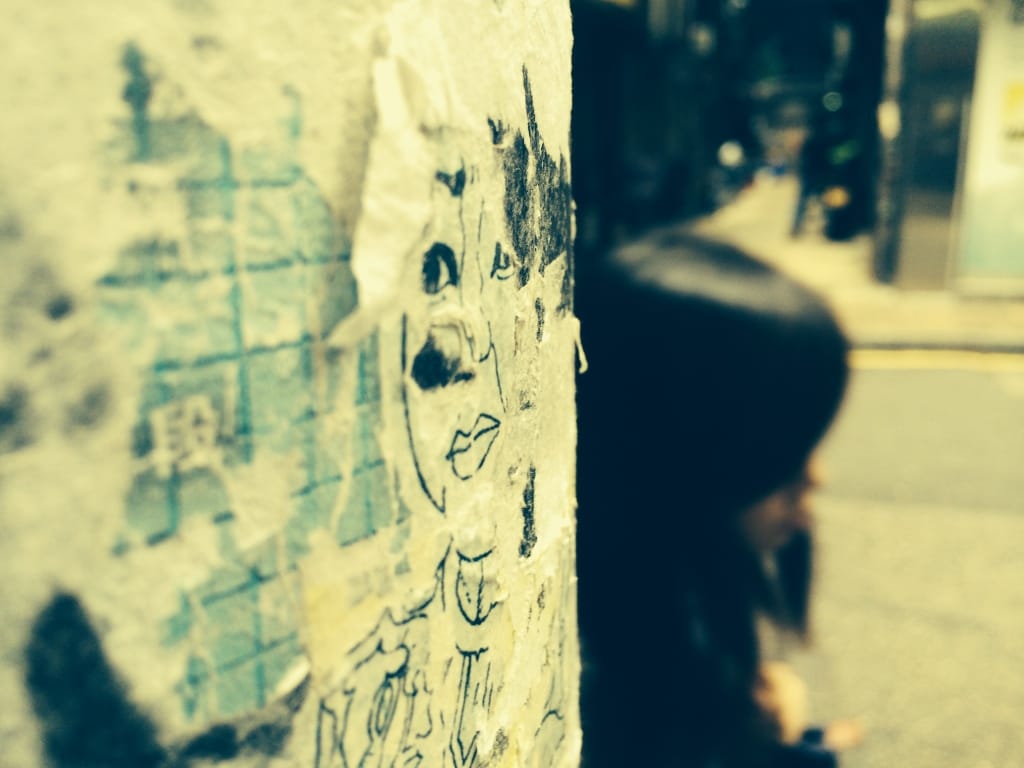
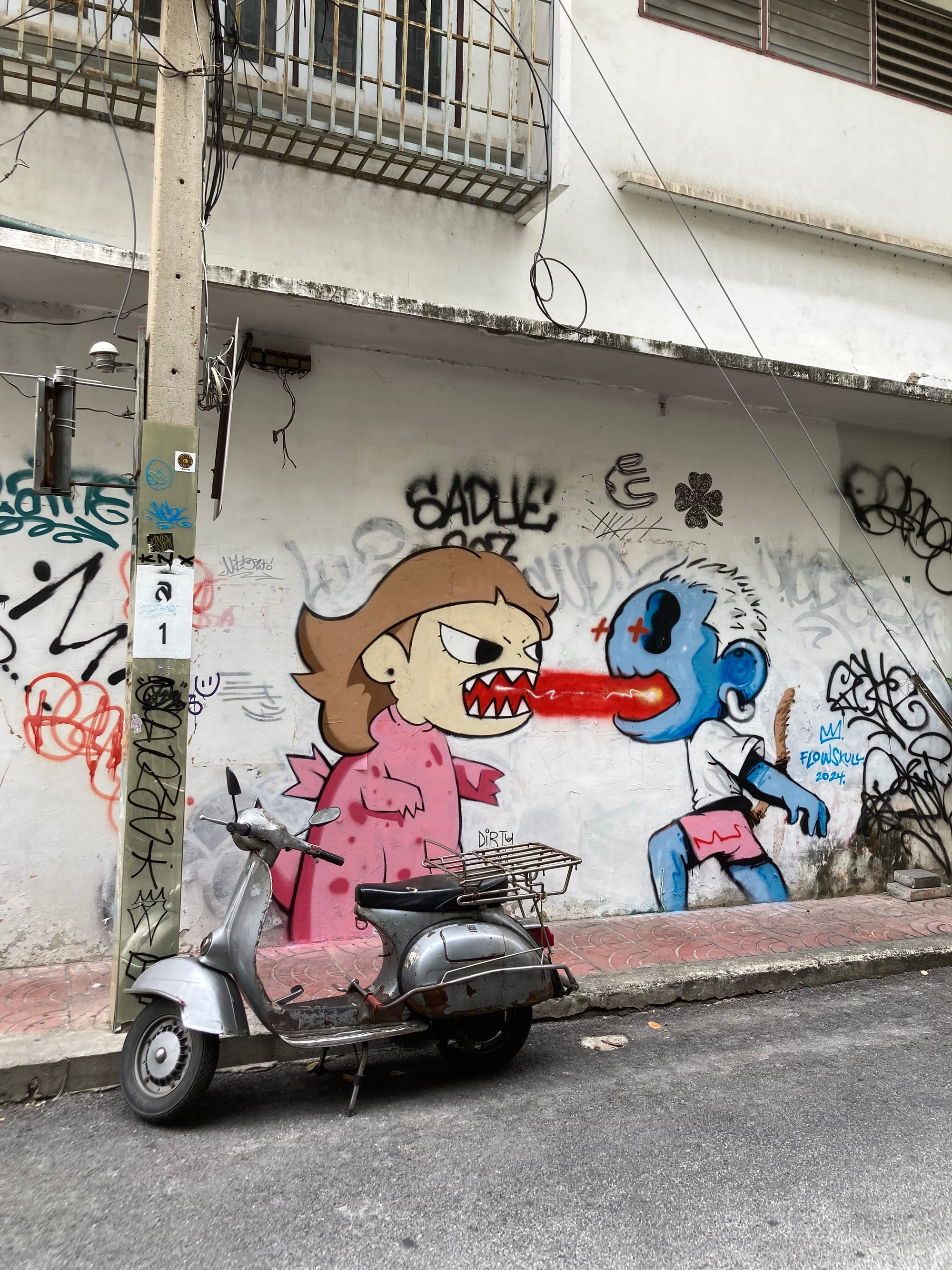
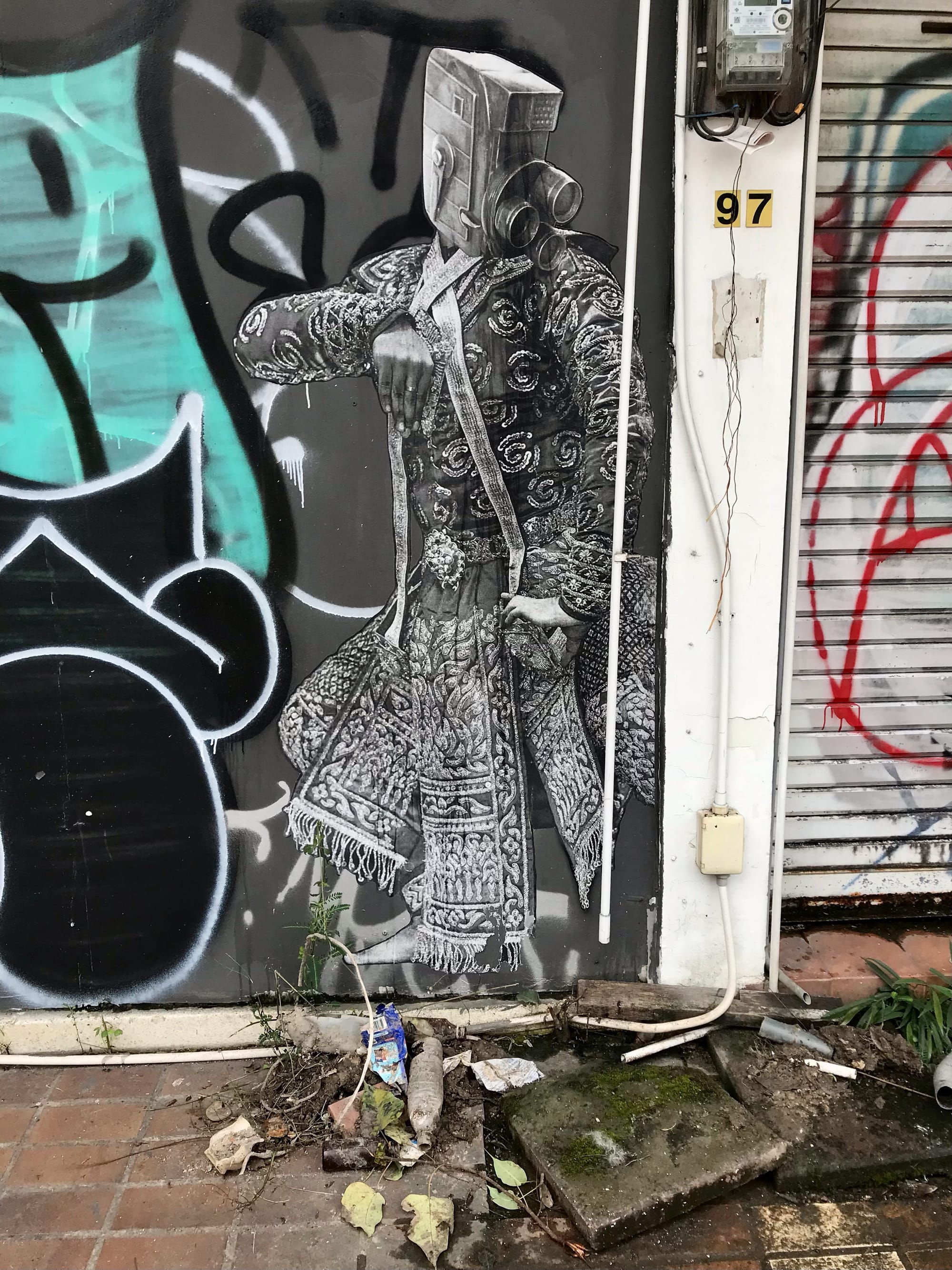
The street art also holds my eye. This time a curious wheatpaste poster, a surrealist collage framed by gritty urban reality—standard spray-paint graffiti, random rubbish, broken paving slabs, and, naturally, a wispy, dangling wire. It is a life-size photographic cut-out of a character from Khon, a kind of dance-drama that takes its stories from the Thai adaptation of the Ramayana. But the masked head of the Phra, or royal-hero figure, has been replaced with a vintage film camera. The frequently observed do some observing of their own.
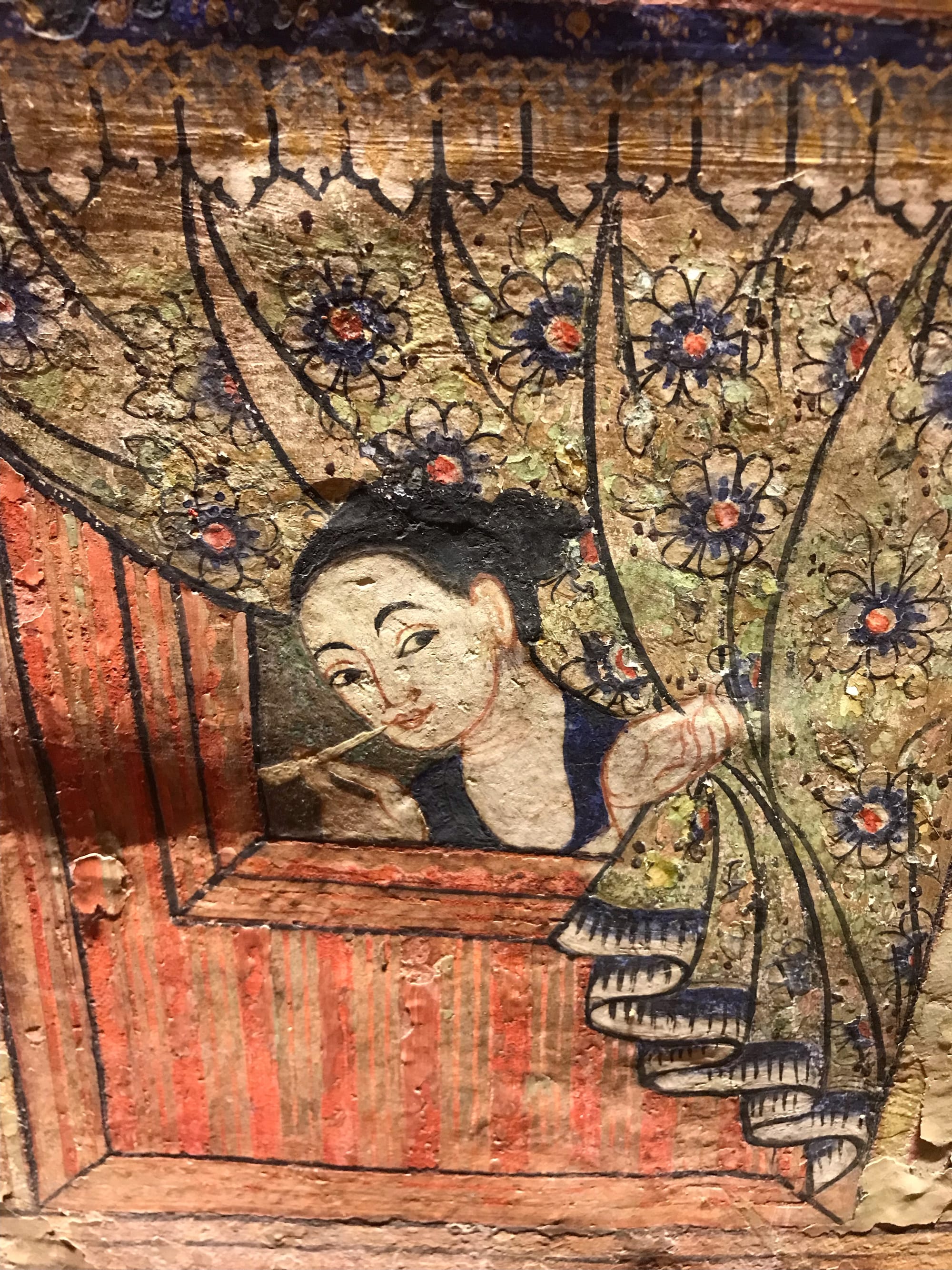
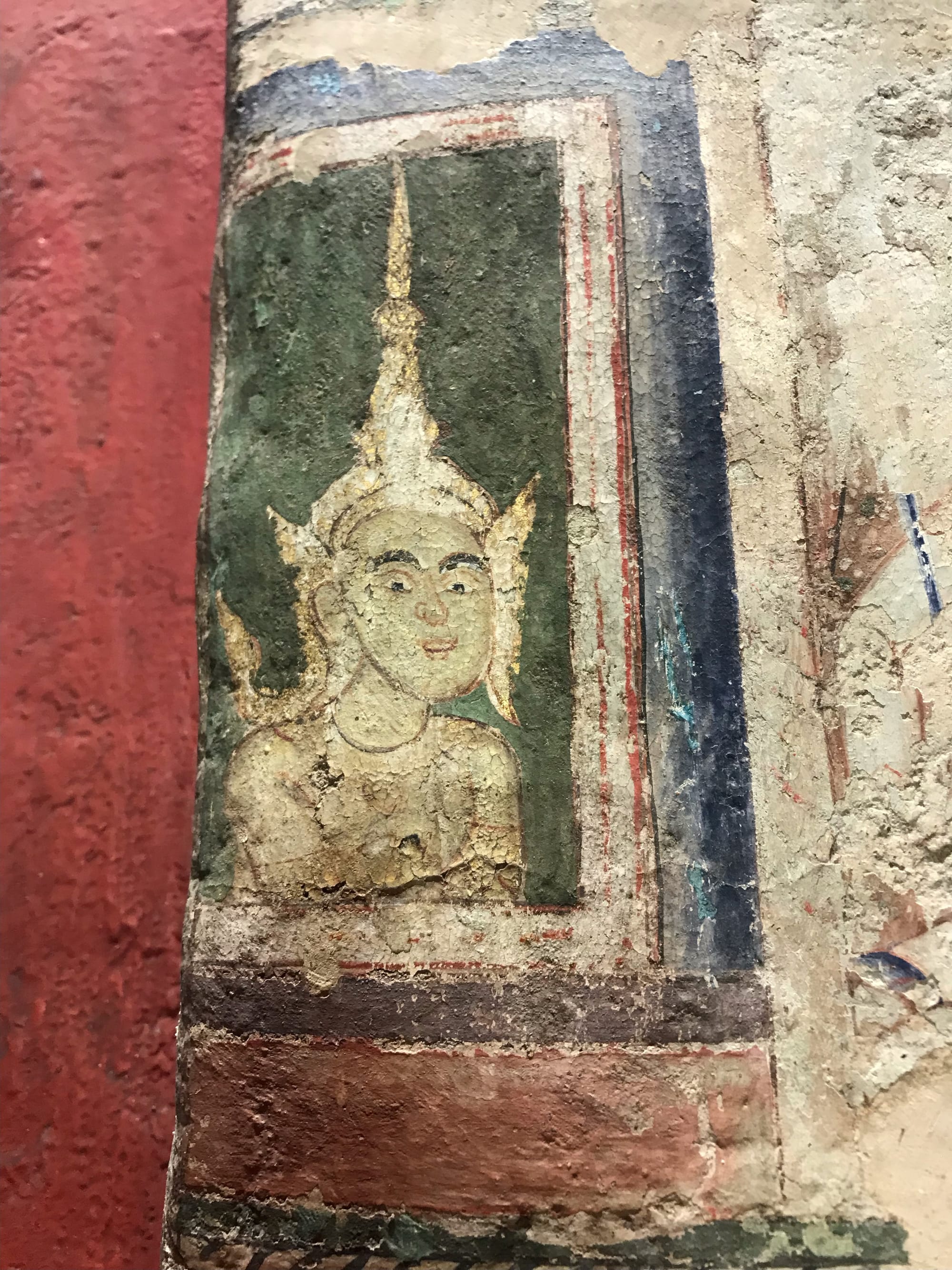
This is a message I find, too, in temple art. A chapel in Wat Phra Singh, Viharn Lai Kham (Guilded Pattern Hall), is covered in sprawling murals depicting two Lanna folktales about the Bodhisattva—the Buddha-to-be in his past lives. Luckily for us, the painters set these stories in their own times, so we now get a glimpse of Northern Thailand in the 1820s. Here, and even in the Ho Sao Inthakin (City Pillar Shrine) of Wat Chedi Luang, where the images are more hieratic and celestial, it is delightful to find among the illustrations of gods and heroes a more particularly rendered, down-to-earth frame, a detail that captures something familiar from daily life: a knowing glance between two people at a banquet
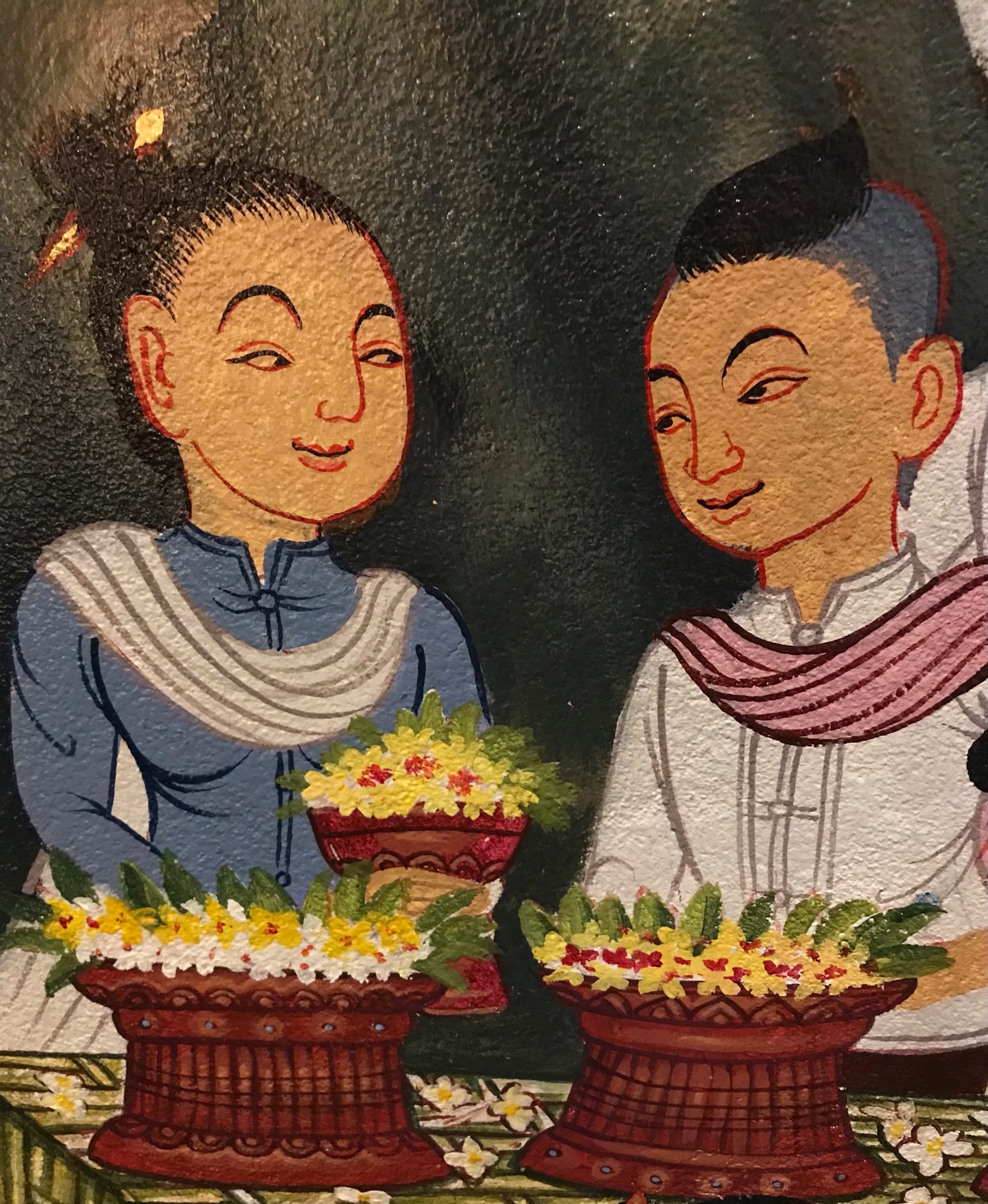
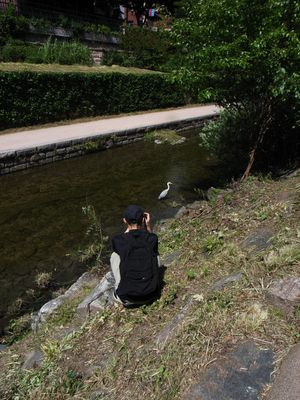
or those who, not unlike you, have paused to observe the world.
©F.L. Blumberg 2026